
"Terra Nera"
79 article(s) found

Brazilian Bourbon Santos Coffee Datella Manor
1. First impressions: Perfect and unique 2. Aroma: Beautiful fruit and Earl Grey 3. Aroma: Caramel, Honey, Marzipan 4. Sweet taste: High sweetness and elegant sweetness 5. Sour: Mild but special acid 6. Alcohol: balanced moderate 7. Aftertaste: Lasting citrus aromas Description: Brazil Datra Manor Datra Manor Bit

Brazil's top Datra estate washed sunrise coffee flavor green beans Description
Professional barista exchanges, please pay attention to coffee workshop (Weixin Official Accounts qianjieccoffee) Flavor description: citrus, almond, chocolate, grapefruit, cream Brazil's top Datra estate rising sun semi-washed varieties: Bourbon Bourbon, Kadulla Caturra production area: MinasGerais Minas-Giras region altitude: 1000 - 1100m Harvest period: June-9

Guatemalan coffee Arabica Guatemala coffee sour Guatemalan coffee how about Guatemalan coffee
Professional coffee knowledge exchange for more information about coffee beans, please follow the coffee workshop (Wechat official account cafe_style) AYARZA REGIONAL about the Ayarza area this coffee comes from the Ayalza region in Santa Rosa. The typical feature of this beautiful area is a lake formed by the crater of an extinct volcano, which is called Lake Ayaza. Because of this fire with a history of 20,000 years

Traga Sulawesi Fine Coffee Asian Flavor Blended with Espresso Italian
Only a few government-owned estates still produce high-quality arabica beans, and thanks to these estates we can taste excellent java beans. Common are Cayumas, Brawan and Jampit (or spelled Jampit). These state-owned estates all taste clean, with soft fruit acidity and aroma. Cayumas is slightly stronger, but

Introduction to the Flavor of Colombian Rose Summer Coffee _ difference between Colombian Rose Summer and Panamanian Rose Summer
For more information about coffee beans, please follow the Coffee Workshop (official Wechat account cafe_style), a rosy summer from the Chinchina Caldas Highlands that grows in the mountains up to 1800 meters above sea level. The rich volcanic soil on the highlands and the humidity brought by plenty of rainfall make this rose summer reach a cup height you don't want to miss. This rosy summer wind

Independent cafes in Macau recommend minority cafes
With the introduction of the concept of boutique coffee, the business model of cafes is also constantly updated, coffee workers begin to pay attention to consumers' consumption preferences and drinking habits. In Macao, compared with traditional Hong Kong-style cafes, independent cafes pay more attention to the quality of coffee and communication and sharing with customers. From the popularization of coffee professional knowledge and the taste of coffee of origin to the culture of fine coffee.

Colombia coffee how to brew black coffee with how much water is better
Professional coffee knowledge exchange More coffee bean information Please pay attention to coffee workshop (Weixin Official Accounts cafe_style) Front Street-Colombia Sun-baked Rose Summer Brewing Parameters Share this rose summer from Chinchina Caldas Highlands, growing in high mountain areas up to 1800 meters above sea level. Fertile volcanic soil on the highlands and ample rainfall bring humidity to this rose summer to your absolute

Cosmopolitan Coffee Coffee Coffee
Professional Coffee knowledge Exchange more Coffee Bean Information Note Coffee Workshop (Wechat account cafe_style) Front Street-Coffee is the country where coffee was first introduced to Central America and has a long history. the coffee organization has been produced and sold in a complete system. Because Costa Rica is located in Central America, there is light and the nature of the land.

What are the characteristics of microbatches? What are its characteristics?
For more information on coffee beans, please follow the Coffee Workshop (official Wechat account cafe_style). This coffee comes from a specific section of an estate, sometimes from a small farm, or from a small plot of land shared by many producers. Coffee is harvested and processed in small batches because of the increase in labor costs.

Which brand of Brazilian coffee is good? Brazil's largest coffee growing area, Brazilian Syrador Coffee.
The exchange of professional baristas follow Coffee Workshop (Wechat official account cafe_style). The producing country introduces Brazil, the world's largest coffee producer, accounting for 1x3 of the world's coffee production. It began to grow coffee as early as 1820, and even peaked in 1920, supplying 80% of the world's coffee. Brazil's coffee-producing areas are concentrated in three southern provinces: Minas

How to drink Costa Rica Vera Sachi coffee? Shangri-La Manor, Costa Rica
Professional coffee knowledge exchange More coffee bean information Please pay attention to coffee workshop (Weixin Official Accounts cafe_style) Costa Rica has seven coffee producing areas, among which Tarazhu, Central Valley and Western Valley are the three most famous and best quality producing areas. West Valley is one of the seven producing areas of Costa Rica, and Valle Occidental is the western mountain.
Basic knowledge of coffee beans (2)
There is a noun called "Coffee Belt". There are more than 60 coffee producing countries in the world, most of which are located in the tropics and subtropics between the Tropic of Cancer (23 °26 'north and south).
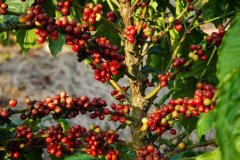
Important conditions of Coffee cultivation
There is a noun called "coffee belt". There are more than 60 coffee producing countries in the world, most of which are located in the tropics and subtropics between the Tropic of Cancer (23 °26 'north and south). This coffee growing area is called "coffee belt (Coffee Belt)" or "coffee area (Coffee Zone)".
What kind of coffee is micro-batch coffee? Micro-batch coffee famous manor introduce micro-batch coffee is it good?
For more information on coffee beans, please follow the Coffee Workshop (official Wechat account cafe_style). This coffee comes from a specific section of an estate, sometimes from a small farm, or from a small plot of land shared by many producers. Coffee is harvested and processed in small batches because of the increase in labor costs.

Planting coffee trees requires the weather, climate and soil quality of the province.
1. Arabica coffee is not resistant to high temperature and humid climate, nor can it stay at a low temperature below 5 ℃ for a long time, so it is mostly planted on steep slopes at elevations of 1000 to 2000 meters above sea level. On the other hand, Robusta caffeine is adaptable (Robusta means tenacious) and is mostly grown in lowlands below 1000 meters above sea level. The average rainfall for the whole year is in

Cultivation conditions of coffee "coffee belt" (Coffee Belt)
There is a noun called Coffee Belt. There are more than 60 coffee producing countries in the world, most of which are located in the tropics and subtropics between the Tropic of Cancer (latitude 2326). This coffee growing area is called a coffee belt or coffee area (Coffee Zone). The annual average temperature of the coffee belt is above 20 ℃, because the coffee tree is a tropical plant, and if the temperature is below 20 ℃,
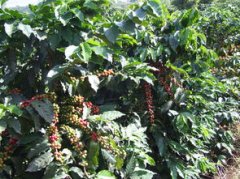
Coffee knowledge what conditions are needed for coffee cultivation
There is a noun called Coffee Belt. There are more than 60 coffee producing countries in the world, most of which are located in the tropics and subtropics between the Tropic of Cancer (latitude 2326). This coffee growing area is called a coffee belt or coffee area (Coffee Zone). The annual average temperature of the coffee belt is above 20 ℃, because the coffee tree is a tropical plant, and if the temperature is below 20 ℃,

Bahia, Brazil| Bahia's three major coffee producing regions
Bahia, Brazil's fifth-largest state, is located in the northeast of the country, 1000 kilometers from the coast, with a high altitude and warm climate. Most of the coffee we buy from Bahia comes from Chapada Diamantina. Farms in the region vary in size-from small family-run farms to sprawling estates with coffee of 1000 hectares or more. Bahia has three.

Brazilian Sandoz Coffee introduces Brazilian Coffee Flavor introduction of Brazilian Coffee hand pulping parameters
Professional coffee knowledge exchange more coffee bean information Please follow the coffee workshop (Wechat official account cafe_style) speaking of Brazil Santos, in addition to the football team, I believe many people will think of coffee. Santos is a port in southeastern Brazil. In the past, the name of the port was printed on the export of coffee (generic coffee) from different provinces.

Brazilian coffee brand Santos / Santos tastes good. How do you drink Brazilian Santos coffee?
Professional coffee knowledge exchange more coffee bean information please follow the coffee workshop (Wechat official account cafe_style) Brazilian coffee was introduced from French Guiana in 1729. Coffee was originally grown in the north, but the coffee trees did not grow well until 1774, when a Belgian missionary planted coffee in Rio, a warmer and humid climate in southern Brazil.